
A shoemaker closes shop due to a lack of buyers, and the neighborhood loses its last shoe repair point. This scenario is repeating in several French cities, where the disappearance of a craft workshop removes a local service that no online platform truly replaces. Craftsmanship in modern society is not just a folkloric heritage: it structures local employment, absorbs part of the repair demand, and faces concrete regulatory changes.
Transmission of Craft Businesses: The Problem That Training Doesn’t Solve
Campaigns to attract young people to manual trades are multiplying, and the number of apprentices is increasing. However, training apprentices is not enough if no one takes over the existing workshops.
In Île-de-France, the CMA has raised concerns about the significant number of craft businesses likely to be transferred in the coming years. The identified risk is clear: without buyers or appropriate funding, entire activities disappear from a territory. A dedicated investment fund has been mentioned to support these transmissions, indicating that the issue goes beyond simple individual support.
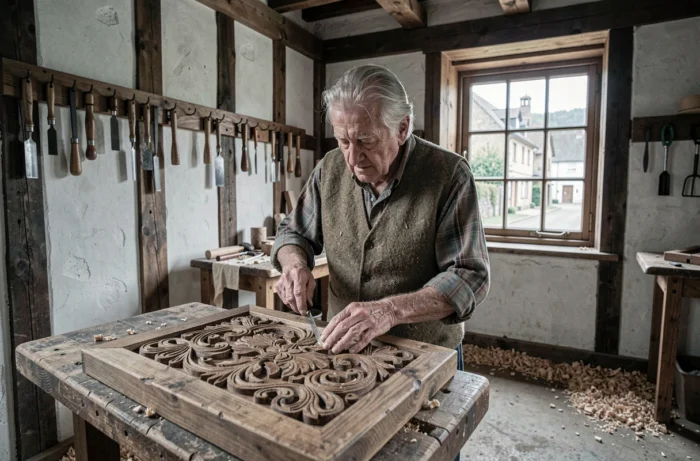
This problem particularly affects trades where expertise relies on a technical gesture passed down in the workshop. When a cabinetmaker or an upholsterer decorator retires without a successor, we do not just lose a business: we lose a local skill. To understand the importance of craftsmanship, one must measure what its disappearance concretely takes away from a living area.

Repair and Local Craftsmanship: Unequal Trajectories Depending on the Trades
The idea that the circular economy benefits all artisans equally is misleading. In Paris, the CMA observes a rise in repair businesses, particularly driven by the repair of electronic devices. Meanwhile, trades such as shoemaking and upholstery are declining.
Two dynamics therefore coexist in the same sector. On one hand, the demand for digital repair creates activity. On the other hand, some traditional manual skills struggle to find their clientele, despite a prevailing discourse favoring “repair rather than throw away.”
What Repairability Obligations Change
The regulatory framework pushes in a direction favorable to repair artisans. The Ministry of Ecological Transition describes obligations for the availability of spare parts for several categories of products, as well as information devices like the repairability index.
These measures create a favorable environment, but they do not guarantee that artisanal repair directly benefits. A high repairability index can also steer the consumer towards self-repair or towards industrial after-sales service networks. The local artisan only benefits if they are visible and accessible, which brings us back to the question of the physical location of workshops.
Mandatory Electronic Invoicing: An Administrative Shift for Artisans
Since 2024, large companies are subject to electronic invoicing. Small and medium-sized craft businesses will gradually follow. For an artisan used to paper invoices or a basic spreadsheet, this transition represents a concrete operational change.
- The receipt of electronic invoices becomes mandatory before issuance, allowing smaller structures time to adapt.
- The choice of a partner dematerialization platform (PDP) or the public invoicing portal should be anticipated, as technical options differ in cost and usability.
- Micro-enterprise artisans are not exempt, contrary to what some may assume: the schedule includes them, with a delay.
This is not a minor formality; it is a transformation of daily administrative life. A plumber or carpenter invoicing around twenty clients a month must integrate a reliable digital tool, under penalty of tax non-compliance. The chambers of trades offer support, but the burden remains on the artisan.
Artisanal Employment in France: An Economic Weight That Structures Territories
Craftsmanship in France encompasses more than 250 trades spread across four sectors: construction, food, production, and services. This network covers the entire territory, from city centers to rural areas.
The construction sector accounts for a major share of artisanal employment. It includes trades in high demand (plumbers, electricians, roofers) where demand exceeds the supply of qualified labor. In food, bakers and butchers maintain a local network that large retailers do not cover in the same way.
Craftsmanship and Youth Employment
Apprenticeship remains the main entry channel into these trades. The majority of craft businesses have fewer than ten employees, meaning that the apprentice works directly with the business owner. This format of daily companionship apprenticeship produces rapid skill development, which is difficult to replicate in larger structures.
The art trades that are hiring are not limited to the most publicized sectors. Engraving, wrought ironwork, or heritage restoration are also seeking profiles, with real opportunities for those willing to accept a specialized focus.
Craftsmanship and Local Production in Response to Consumer Expectations
The demand for locally made products is increasing, driven by environmental concerns and distrust of mass production. For the artisan, this trend is an opportunity as long as they know how to seize it.
A ceramist or an artisanal soap maker selling through short circuits reduces their logistical footprint and can adjust their production to real demand. Where industry produces in bulk and manages inventories, the artisan often produces on demand or in small batches, which limits waste.
This logic only works if the price remains acceptable to the customer. The cost difference between a French artisanal product and its imported industrial equivalent varies greatly by sector, and the consumer often decides based on their wallet. Craftsmanship finds its niche when it offers verifiable quality, complete traceability, and a direct link with the maker.
The three concrete levers remain the same: facilitate the financing of business transfers, clarify fiscal and regulatory obligations, and maintain a local clientele informed about what local craftsmanship brings them daily.