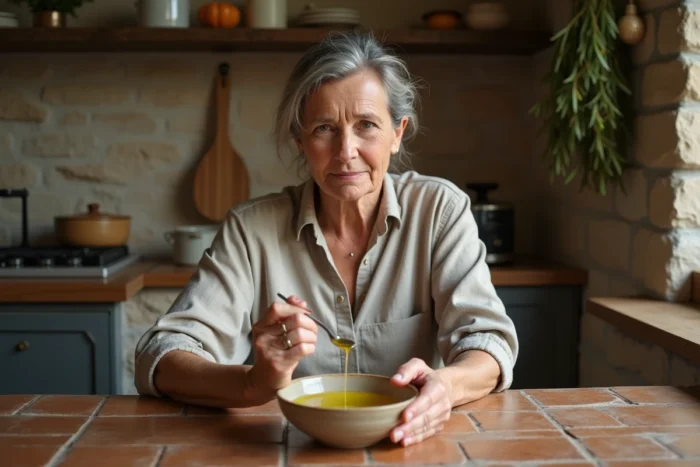
The ritual of pouring olive oil into water to detect or remove the evil eye circulates on social media like a miracle recipe. Posts accumulate views, tutorials multiply, but none ask the question that should come first: what is the basis of this gesture, and where does cultural tradition stop in the face of total lack of evidence?
Olive oil and surface tension: what physics says about the ritual
The principle of the test is simple. A few drops of olive oil are poured into a plate or glass filled with water. If the drops remain separate and float, all is well. If they disperse, merge together, or sink, the evil eye would be present.
This behavior is explained by known physical properties. Olive oil has a lower density than water, which causes it to float naturally. The surface tension keeps the drops in distinct circular shapes on the surface. Several factors modify this reaction: the temperature of the water, the presence of soap residues in the container, the quality of the oil, or simply the height from which the drops are poured.
In other words, the dispersion or merging of the oil reveals nothing more than varying physicochemical conditions. The result of the “test” changes from one trial to another depending on the materials used, without any external energy intervening. Online content that presents this gesture as a diagnosis almost never mentions this reality.
Those looking for a tip to remove the evil eye with olive oil will find detailed descriptions of the ritual, but the value of this practice remains primarily symbolic and interpretive.
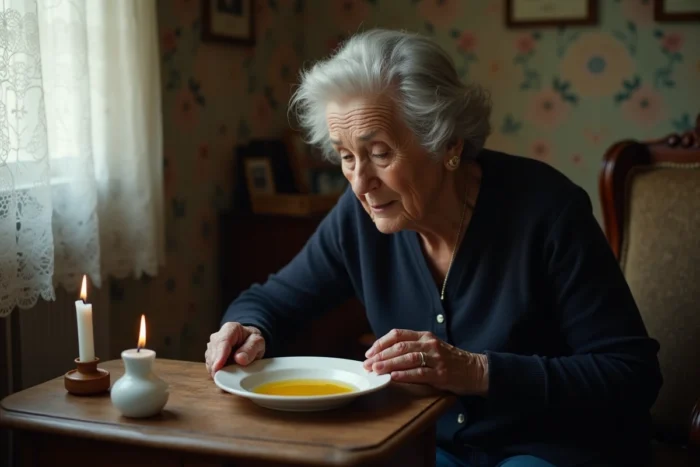
Evil eye and Mediterranean traditions: a shared belief across continents
The belief in the evil eye is not limited to a single culture or religion. It spans Greek, Turkish, southern Italian, Corsican, Portuguese, Maghrebian, and Middle Eastern traditions for centuries. The Turkish nazar boncuk, the occhio in Italy, the aïn in the Arab world: the names change, but the symbolic mechanism remains the same.
The idea is based on the conviction that a gaze filled with envy or jealousy can cause bad luck, unexplained fatigue, or repeated blockages. In each culture, protective or energetic cleansing rituals have developed to respond to this belief. Olive oil is just one medium among others, alongside salt, sage, holy water, or certain prayers.
What distinguishes the oil ritual is its material simplicity. It requires neither a practitioner nor a rare object, which partly explains its longevity and spread on social media. Transmission often occurs within families, from generation to generation, with sometimes very marked local variations.
Protection ritual or placebo effect: the limits to know
No published scientific study has ever validated the idea that olive oil can detect or neutralize a negative external influence. The available data do not allow for any measurable effectiveness of this type of practice.
On the other hand, the ritual can produce a psychological reassurance effect. Performing a codified gesture, in a calm setting, with a precise intention, can help some people reduce their anxiety. This mechanism is more about psychology than magic or witchcraft.
Field reports vary on this point. For some practitioners, the mere act of performing the ritual is enough to feel better. Others find no relief. This disparity confirms that the effect depends on the person and not on the gesture itself.
What the ritual does not replace
- A medical follow-up in case of chronic fatigue, sleep disorders, or persistent pain without identified cause
- Psychological support in the face of repeated feelings of bad luck or generalized anxiety affecting daily life
- A perspective on toxic relational dynamics, sometimes confused with an “evil eye” when they relate to concrete situations
Presenting an olive oil ritual as a solution to health or well-being issues poses a real risk. France, within its secular framework, protects freedom of conscience and belief, but no public institution recognizes this type of practice as a treatment.
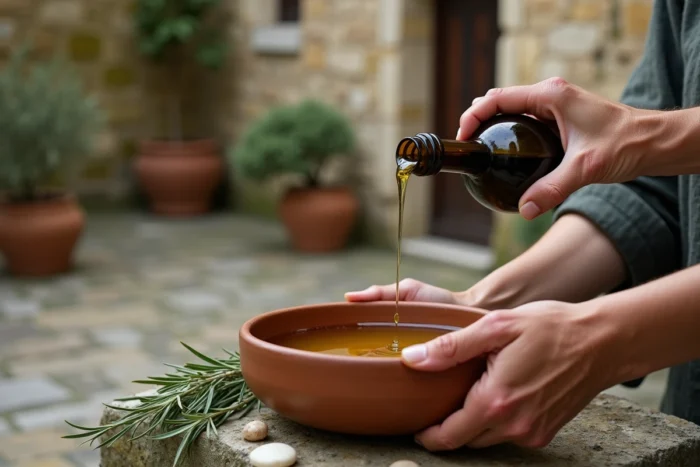
Practicing the olive oil ritual: elements of the traditional protocol
For those who wish to perform this ritual in a strictly cultural or personal context, here are the elements that Mediterranean tradition most often transmits.
- Fill a shallow plate or a glass with clear water, preferably at room temperature to limit variations in surface tension
- Pour three drops of extra virgin olive oil, one by one, allowing a few seconds between each drop
- Observe the behavior of the drops: if they remain round and separate, tradition considers that there is no evil eye; if they spread or merge, additional energetic cleansing (salt, sage, prayer) is recommended by practitioners
- Throw the water outside the house according to certain variations of the ritual, to symbolize the removal of negative energies
This protocol varies significantly from family to family and from region to region. There is no “official” version or common reference.
Signs often associated with the evil eye
People who resort to this ritual generally mention a series of recurring signs: sudden fatigue without medical cause, a feeling of heaviness, a streak of bad luck, unusual conflicts in the couple or at work. These signs remain subjective and can correspond to many ordinary situations, from work stress to lack of sleep.
The olive oil ritual belongs to the Mediterranean cultural heritage. It reflects an ancient relationship between humans and their fears in the face of the unexplained. Its practice is a personal choice, provided that it is never substituted for medical or psychological advice when symptoms persist.