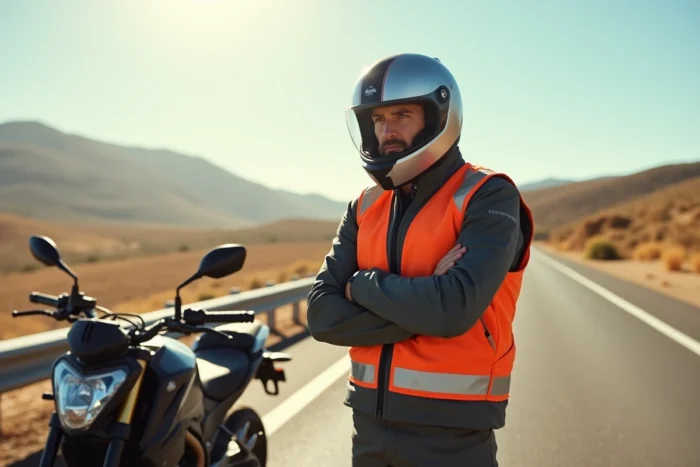
Are you preparing a motorcycle road trip in Spain and wondering what you need to wear to ride legally? The Spanish regulations on motorcycle gear have recently changed, and the requirements are no longer limited to the helmet. Here’s what the law stipulates, including for foreign motorcyclists passing through.
Gloves and closed shoes mandatory in Spain from 2026
Until recently, a certified and secured helmet was the only piece of equipment required for motorcyclists in Spain. The reform of the General Traffic Regulation changes the game.
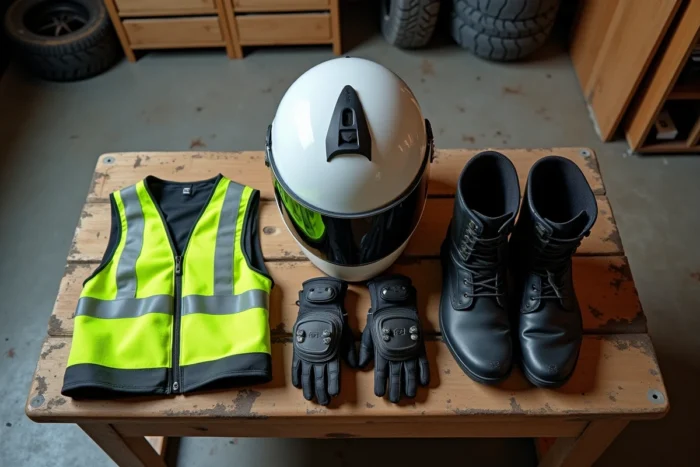
Starting in 2026, all motorcycle and moped riders must wear protective gloves and closed shoes on all roads. This requirement also applies to passengers. It affects both residents and tourists.
In practical terms, your low-top sneakers or sandals will no longer be acceptable. A pair of classic motorcycle boots or high-top shoes will suffice, as long as they cover the ankle. For gloves, opt for reinforced models at the palms and joints. An article detailing mandatory motorcycle equipment in Spain specifies the criteria to consider when choosing compliant gloves.
If you fail to comply, the fine amounts to 200 euros per violation. Wearing a helmet but not gloves is already a possible infraction.
Motorcycle helmet in Spain: end of the medical exemption
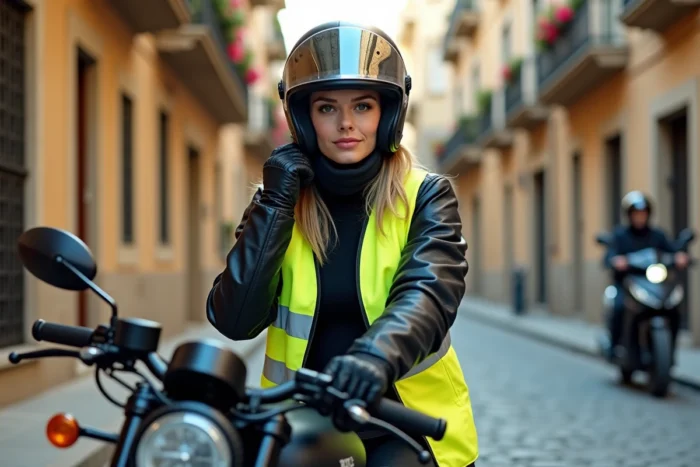
Wearing a certified helmet remains the basic rule. Nothing new on this point. However, the same reform removes a detail that few motorcyclists were aware of.
Until now, there was an exemption allowing riders not to wear a helmet for medical reasons. This exception, sometimes abused, will completely disappear with the 2026 reform. No medical certificate will allow riding without a helmet anymore.
For a French motorcyclist in transit, this doesn’t change much: wearing a helmet was already a reflex. This information is mainly relevant for foreign residents living in Spain who may have obtained such an exemption in the past.
What type of helmet to choose for Spain?
Spanish law does not specify a type (full-face, jet, modular). It requires a certified helmet bearing the ECE marking. A certified jet helmet remains perfectly legal, even if it offers less chin protection.
With the summer temperatures in southern Spain, many motorcyclists opt for a modular helmet. It’s a compromise between ventilation and protection. Just keep the chin guard closed while riding: some checks penalize an open modular helmet as improperly worn.
Reflective vest and V16 beacon: what concerns motorcycles
Have you ever seen warning triangles placed on the side of a Spanish highway? This system is on its way out.
Since January 1, 2026, all vehicles registered in Spain must carry a connected V16 light beacon to signal an emergency stop. This beacon replaces warning triangles, which are deemed dangerous to place on fast roads.
For foreign motorcycles, the situation is more nuanced. The V16 beacon requirement targets vehicles registered in Spain. A passing French motorcyclist is not required to equip one. However, the reflective vest remains mandatory for any motorcyclist riding in Spain.
- The high-visibility vest must be quickly accessible, stored under the seat or in a top case, not at the bottom of a saddlebag
- It must be worn in case of an emergency stop on the roadside, both day and night
- An non-compliant vest (without reflective strips, inappropriate size) may be considered absent during a check
Daytime low beam headlights: a often forgotten obligation
In France, motorcycles ride with lights on at all times. The same applies in Spain, but not all foreign motorcyclists are aware of this.
Low beam headlights must remain on even during the day, on all Spanish roads. This rule applies to motorcycles as well as cars. On newer motorcycles, the headlight turns on automatically when starting. Make sure this is the case on your machine before crossing the border.
A headlight off in broad daylight may seem harmless. For the Guardia Civil, it’s a reason for a check and a fine.
Summary of mandatory motorcycle equipment in Spain
| Equipment | Requirement | Affects tourists |
|---|---|---|
| ECE certified helmet | Mandatory, secured | Yes |
| Protective gloves | Mandatory from 2026 | Yes |
| Closed shoes | Mandatory from 2026 | Yes |
| Reflective vest | Mandatory (emergency stop) | Yes |
| Daytime low beam headlights | Mandatory | Yes |
| Connected V16 beacon | Mandatory (registration ES) | No |
The Spanish motorcycle regulations are gradually aligning with what already exists in France for gloves. The difference is the addition of closed shoes, a requirement that does not exist in the French Highway Code. For a motorcyclist used to riding in sneakers during the summer, this is a point to anticipate before crossing the Pyrenees.