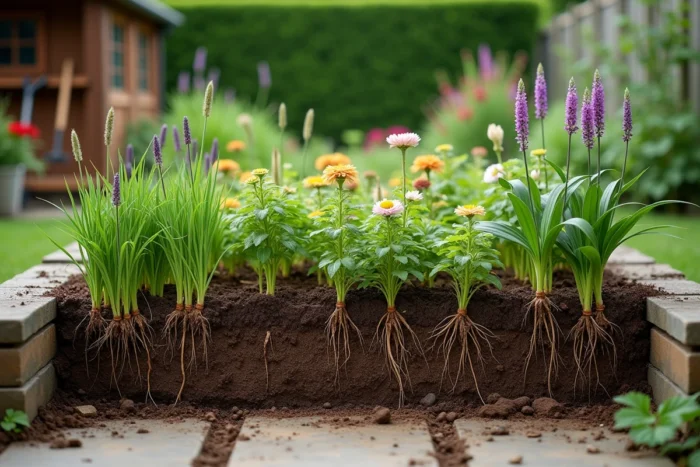
A plant with deep roots draws water and nutrients well below the surface, where the soil remains cool even during a heatwave. This type of rooting, called taproot, distinguishes certain perennials, grasses, and shrubs capable of enduring weeks without watering. This classification includes ten species particularly suited for a sustainable garden, chosen for their ability to anchor deeply in various soils, including clay or limestone.
1. Tall fescue: the lawn grass that reaches 60 cm
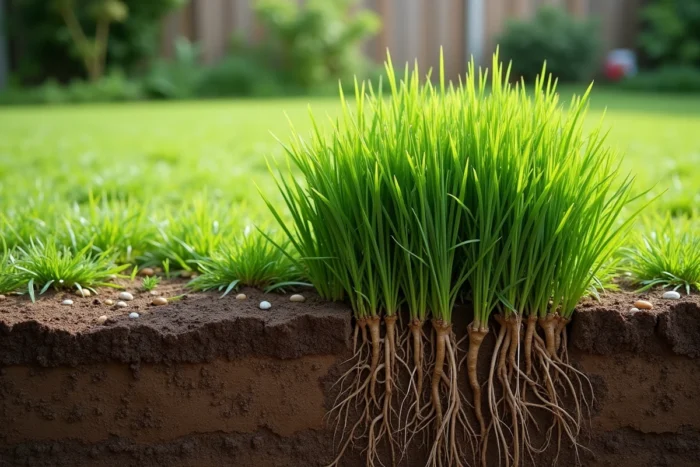
Tall fescue develops a root system that can reach 60 cm deep, compared to about fifteen centimeters for a typical English ryegrass. This difference radically changes the resilience of a lawn in summer.
Among the plants with deep roots for the garden, tall fescue remains the most accessible: it can be sown like any grass and tolerates moderate foot traffic. In well-drained soil, it maintains an acceptable green without prolonged irrigation, making it a top choice for reseeding a lawn scorched by the sun.
2. Gaura lindheimeri: the perennial that doesn’t falter without water
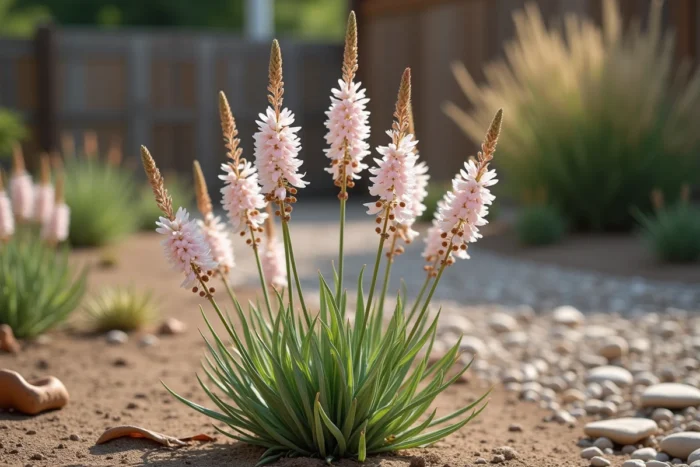
Gaura lindheimeri produces a thick taproot that plunges deep into the soil. Once established (allow a full season), this perennial tolerates prolonged drought episodes, even beyond 40 °C, without losing its airy white or pink blooms.
Its light growth habit fits well in both borders and gravel edges. It attracts numerous pollinators, a benefit often overlooked when discussing drought resistance.
3. Purple coneflower: taproot and long-lasting blooms
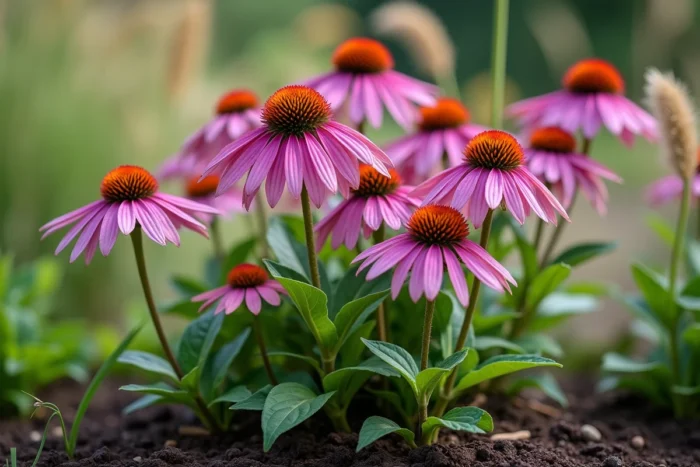
The coneflower (Echinacea purpurea) drives a robust taproot that allows it to survive in poor, dry soils. Its blooms extend from early summer until the first frosts, making it valuable for maintaining color in a low-maintenance flowerbed.
It thrives in full sun, in ordinary to limestone soil. When paired with ornamental grasses, it creates naturalistic scenes that require very little watering after the first year of planting.
4. Steppe sage: the ultimate drought shrub
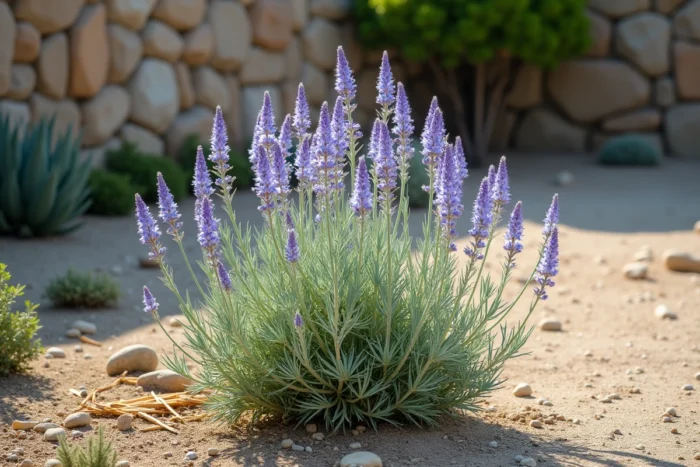
Shrubby sages from steppe environments (Salvia nemorosa, Salvia sylvestris) develop a deep root system suited to well-draining soils. Their aromatic foliage and blue or violet spikes persist even when the thermometer rises.
No regular watering is needed once the rooting is established. Too much moisture in winter is more harmful than a scorching summer. Prune after the first bloom to encourage a second flowering at the end of the season.
5. Cultivated alfalfa: the record nitrogen-fixing rooter
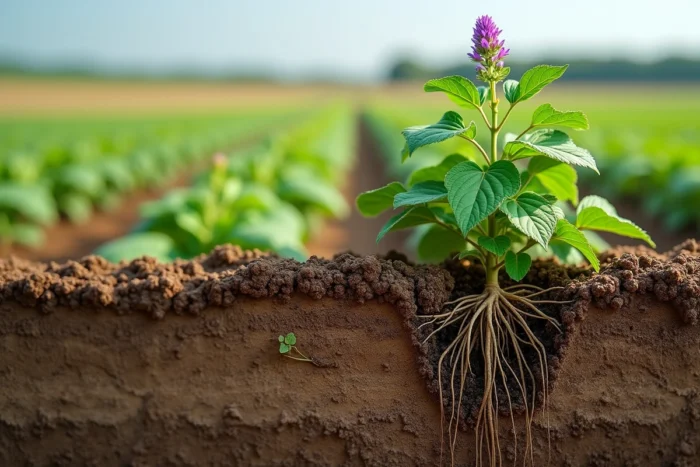
Used as a green manure or ground cover, alfalfa (Medicago sativa) sends its roots several meters deep. This ability allows it to capture water from deep sources and fix atmospheric nitrogen in the soil, enriching the earth for neighboring crops.
In the garden, it serves as a living cover between the rows of an orchard or in fallow. Its regular mowing produces rich mulch. It prefers calcareous and well-drained soils.
6. Wild chicory: the forgotten root vegetable of flowerbeds
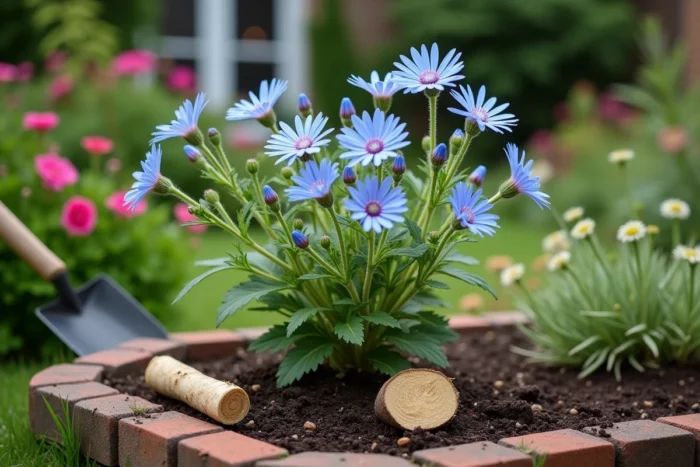
Wild chicory (Cichorium intybus) develops a fleshy taproot capable of descending well beyond the topsoil layer. Its blue flowers, opening in the morning, add a rustic touch to a dry garden.
It thrives in compacted soils where other plants struggle to establish. The root, by breaking through hard layers, improves soil structure and permeability, an ecological service rarely highlighted.
7. Common lavender: resistant to cold, sun, and drought
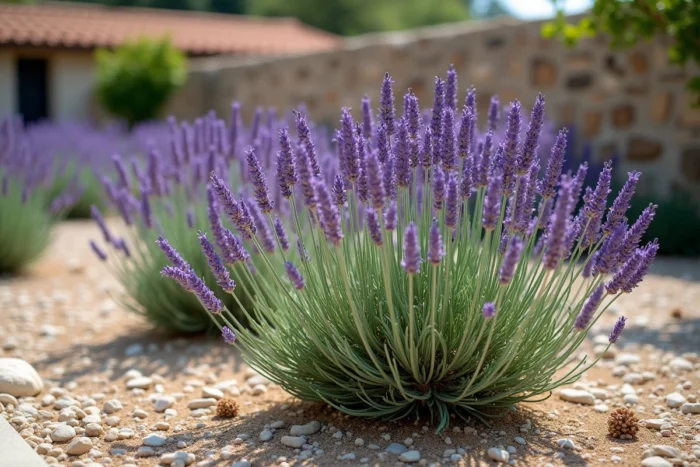
Lavender (Lavandula angustifolia) anchors itself in stony and calcareous soils thanks to a deep and branched root network. It withstands full sun, wind, and moderate frost episodes, making it adaptable to most regions of France.
Its maintenance is limited to an annual pruning after flowering. In borders or beds, it structures the garden while requiring almost no watering after the second year.
8. Botanical rose: an underestimated rooting
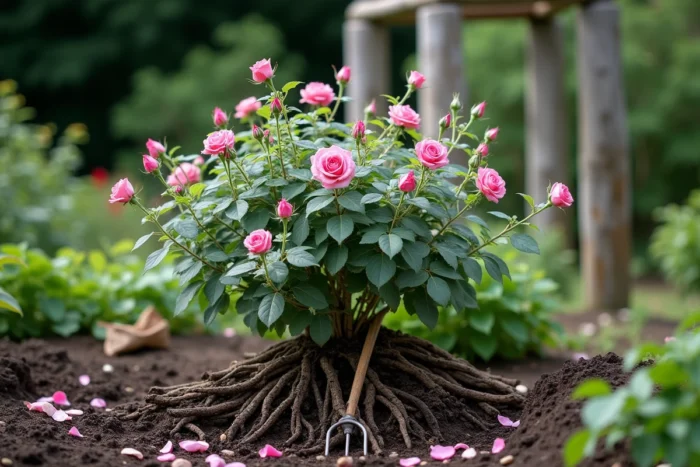
Botanical roses (Rosa canina, Rosa rugosa) develop a root system significantly deeper than modern hybrids grafted onto shallow rootstocks. Planted on their own roots, they establish themselves permanently without special care.
Their resistance to diseases and tolerance to drought make them strong candidates for free hedges or slopes. Their rose hips nourish wildlife in autumn.
9. Mullein (Verbascum): the pioneer of poor soils
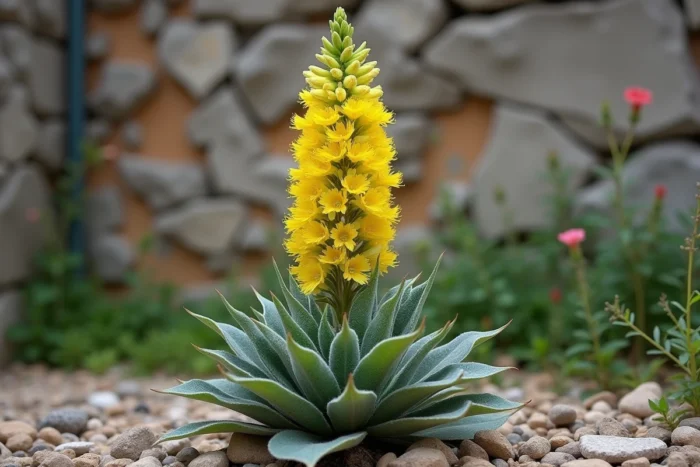
Mullein produces a rosette in the first year, then a spectacular flower spike in the second. Its taproot plunges into the poorest, stony, or sandy soils, where it captures residual water from deep sources.
It is a biennial plant that self-seeds spontaneously. Placed at the back of a flowerbed, it adds verticality without requiring fertilizer or watering. It naturally colonizes fallow land, proving its total autonomy.
10. Asphodel: the Mediterranean with a fleshy taproot
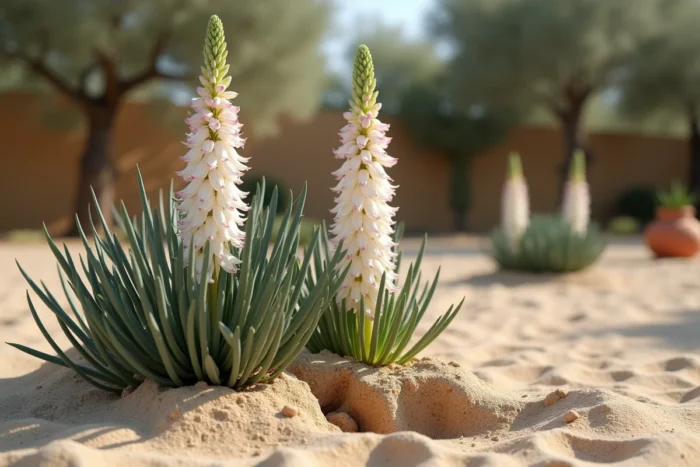
The asphodel (Asphodelus albus) stores reserves in its deep tuberous roots, allowing it to remain dormant during the driest months and to bloom again as soon as the rains return. It embodies the strategy of drought avoidance rather than mere tolerance.
Adapted to poor, well-draining soils and full sun, it fits into a dry garden or an exposed slope. Its spring blooming in white clusters precedes that of most summer perennials, extending the garden’s season of interest.
Each of these ten species meets a specific need depending on soil type, exposure, and desired maintenance level. They all share a common point: their deep rooting reduces dependence on watering and strengthens soil stability against increasingly frequent climatic episodes. Choosing plants by the depth of their roots, rather than by their mere appearance, remains the most direct lever for a lasting garden.