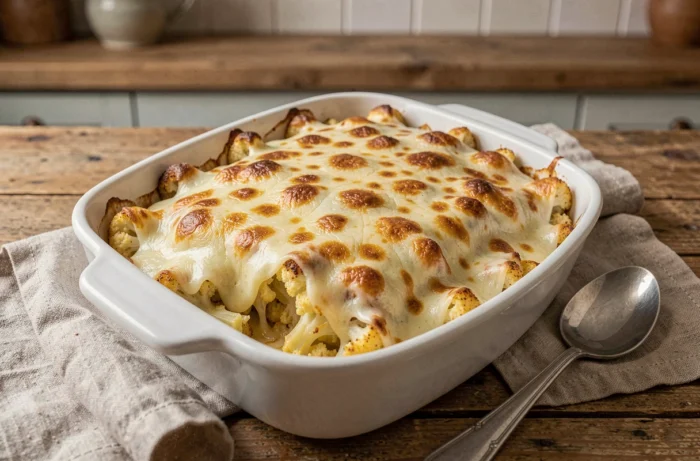
A cauliflower gratin with béchamel freezes easily, provided you master two parameters: the cooking level before freezing and moisture management. Cauliflower releases a lot of water during cooking, and the béchamel, rich in dairy products, can destabilize when passing through the freezer. Understanding these mechanisms allows you to achieve a reheated gratin that retains a gratin-like texture and a cohesive sauce.
Freezing raw or cooked gratin: two approaches, two results
The distinction between freezing an assembled but uncooked gratin and freezing a gratin that has already been baked radically changes the final texture. Online recipes rarely mention this difference, yet it determines the success of the dish after thawing.
A raw assembled gratin freezes better than a cooked gratin. The reason is simple: the béchamel has not yet undergone prolonged cooking, the cheese has not melted, and the cauliflower retains a firmness that absorbs thermal shock better. When serving, simply transfer the dish directly from the freezer to the oven, without prior thawing, adding extra cooking time.
In contrast, a gratin that has already been cooked and then refrozen goes through two cycles of heat. The béchamel tends to separate, the cauliflower becomes softer, and the cheese loses its crispness. It is not unusable, but the result is significantly less satisfying. If you want to freeze a cauliflower gratin with béchamel under good conditions, prioritize assembling it raw.
Precooking cauliflower: managing water before freezing
Raw cauliflower contains a high proportion of water. If you assemble it as is in the dish with the béchamel, this water will be released during baking and dilute the sauce. After passing through the freezer, the problem amplifies: the ice crystals formed in the florets release even more liquid upon thawing.
The solution is to blanch the florets for a few minutes in boiling salted water, then drain them thoroughly. Blanching breaks the surface plant cells, releasing some of the water before assembly. Once drained, spread the florets on a clean cloth or paper towels for about ten minutes.
Do not prolong cooking at this stage. The florets should remain firm, almost crunchy. They will finish cooking in the oven after freezing. Cauliflower that is blanched for too long before freezing will end up mushy when taken out of the oven.
Béchamel for freezing: thickness and stability
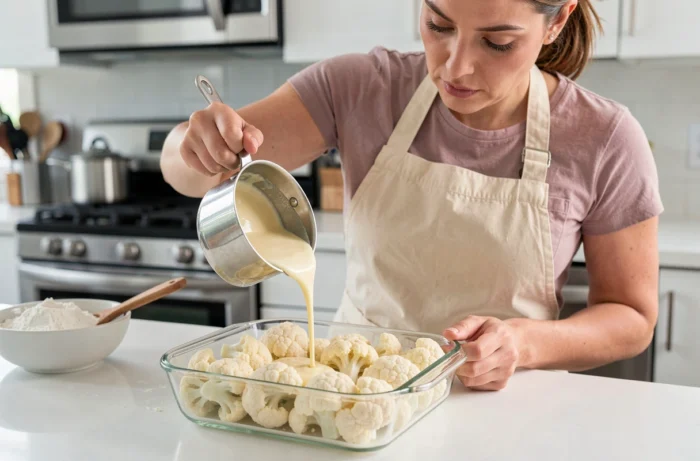
A standard béchamel (butter, flour, milk) withstands freezing, but it tends to grain or separate upon reheating. To limit this risk, two adjustments are sufficient.
- Prepare a béchamel that is slightly thicker than usual by increasing the proportion of flour relative to the milk. A denser sauce is better at resisting destabilization caused by ice crystals.
- Let the béchamel cool completely before pouring it over the cauliflower. Assembling a hot gratin before freezing creates condensation in the container, which adds unwanted moisture and promotes frost formation.
- Coat the florets evenly without drowning the bottom of the dish. Excess sauce at the bottom turns into a watery puddle after thawing.
An alternative strategy is to freeze the béchamel separately from the blanched cauliflower. According to specialized resources on sauce preservation, homemade béchamel can be stored in the freezer for up to three months in an airtight container. When ready to use, simply reheat it over low heat, adding a splash of milk and whisking to re-emulsify. This method offers a better final texture, at the cost of assembling it on the same day.
Container, shelf life, and reheating in the oven
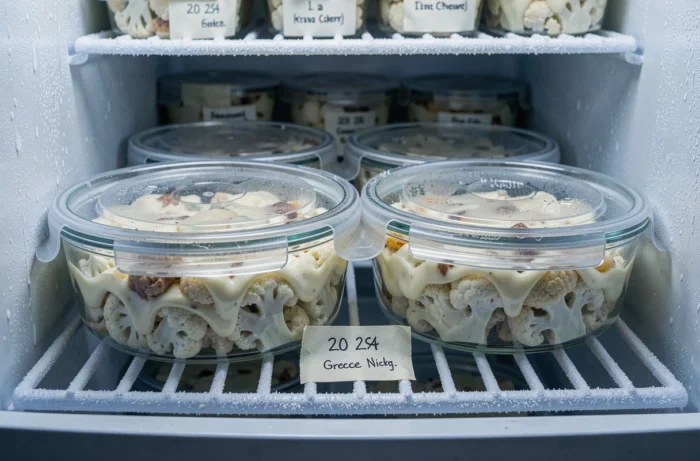
The choice of freezing dish has a direct impact on practicality. A glass dish that can go from oven to freezer avoids any transfer: the gratin goes directly from one to the other. Cover it with a well-fitted plastic wrap, then a layer of aluminum foil to limit air contact and prevent freezer burn.
In terms of duration, the taste quality remains suitable for two to three months in the freezer. Beyond that, the gratin remains safe to eat, but the texture of the cauliflower and the consistency of the béchamel gradually degrade.
Reheating a frozen gratin without drying it out
For a raw assembled and frozen gratin, bake it directly without thawing. Cover the dish with aluminum foil during the first part of the cooking to allow the center to heat without burning the top. Remove the foil at the end of cooking to let the cheese gratin.
- Preheat the oven to moderate temperature rather than high heat. An oven that is too hot sears the surface before the inside is thawed.
- Allow significantly longer cooking time than for a fresh gratin, since the dish starts from a frozen state.
- Check the cooking by piercing the center with the tip of a knife: if it comes out cold, continue cooking covered.
For a gratin that was already cooked before freezing, thawing in the refrigerator the day before is preferable. Then reheat in the oven covered, then uncovered at the end of the cycle to restore crispness to the grated cheese.
Time between preparation and freezing: the window to respect
An assembled or cooked gratin should not remain at room temperature for more than two hours before being placed in the freezer. The béchamel, rich in milk and butter, provides a favorable environment for bacterial growth at room temperature. Allow the dish to cool to room temperature, then transfer it to the refrigerator if you cannot freeze it immediately.
Freezing the gratin on the same day it is prepared ensures the best sanitary and taste quality. A gratin stored in the refrigerator for two days before freezing will have already begun to lose freshness, and the cauliflower will have released water into the béchamel.
The cauliflower gratin with béchamel is one of those dishes that benefits from being prepared in batches to simplify weekday meals. The key remains to take care of draining the cauliflower, slightly thickening the sauce, and freezing on the same day, before cooking. These three reflexes make the difference between a reheated gratin that is bland and watery, and a dish that comes out of the oven with a cohesive sauce and a golden top.