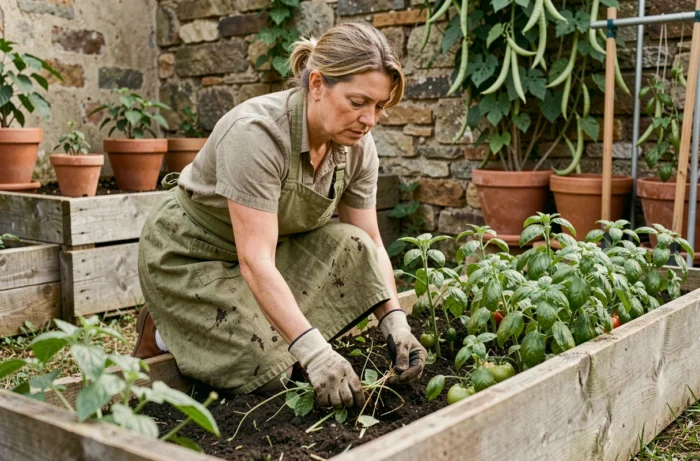
An organic vegetable garden is based on a simple principle: feed the soil so the soil can feed the plants. No synthetic products, no chemical shortcuts—just precise practices that work with the natural processes of an ecosystem.
Since 2019, synthetic plant protection products have been banned for home gardeners. Biocontrol products and those approved for use in organic farming are still permitted, but be sure to read the label: “naturally derived” does not mean “risk-free” or even “approved.”
Organic vegetable gardens and watering restrictions: what local orders really change
Have you noticed that water restrictions rarely list vegetable gardens as an exception? That’s normal. A home vegetable garden is not automatically exempt from drought orders. Rules vary from one department to another, sometimes even from one municipality to another, and depend on water availability, watering methods and permitted hours.
In November 2026, restrictions were eased in Creuse following rainfall. However, watering limits remained in place because groundwater replenishment was still insufficient. Local improvement does not mean water supplies have been restored.
Before planting your vegetables, check the orders in force in your area. Then adjust your practices to use less water without sacrificing productivity. Three measures can make a real difference:
- Thick mulch (straw, wood chips, fallen leaves) reduces evaporation and keeps the soil cool, even in midsummer. A sufficiently dense layer also limits weed germination.
- Choosing drought-tolerant vegetable varieties, such as certain heirloom tomatoes or deep-rooted squash, reduces the need for regular watering.
- Watering at the base of plants, early in the morning or in the evening, prevents water loss through evaporation and complies with the watering times set by most local orders.
For more information on techniques suited to gardening without chemicals, visit https://www.jardinage-bio.com, which covers many methods for home vegetable gardens.
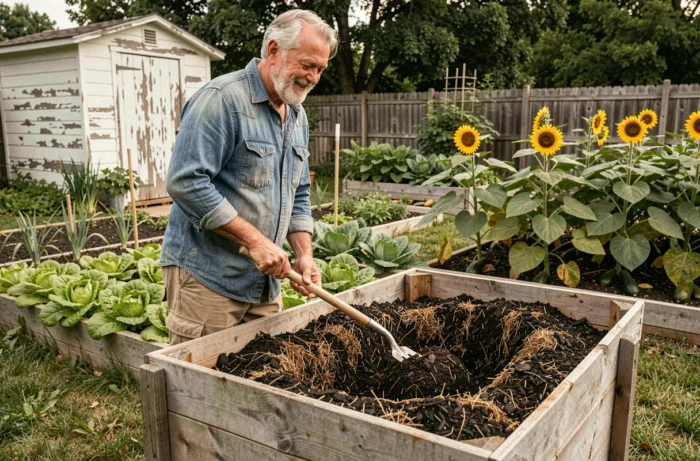
Natural soil fertilization in the vegetable garden: compost, green manures and life underground
Living soil is dark in color, crumbly in texture and home to earthworms. This is the kind of soil that produces healthy vegetables without chemical inputs.
Compost as the foundation of soil fertility
Well-rotted compost made from kitchen and garden waste provides both nutrients and an airy structure for the soil. Spread in autumn or early spring, it feeds the microorganisms that make nutrients available to plant roots.
Mature compost has no unpleasant smell and looks like forest soil. If it has a strong odor, it is not ready. Using it too soon can burn young roots.
Green manures between crops
Leaving soil bare in winter exposes it to erosion and nutrient leaching. Sowing mustard, phacelia or clover after harvesting covers the soil and fixes atmospheric nitrogen. In spring, these plants are cut down and lightly worked into the soil.
Green manures replace deep plowing by loosening the soil with their roots. Less mechanical work, more biological activity.
Companion planting and crop rotation: two ways to prevent vegetable garden diseases
Growing the same vegetables in the same spot every year depletes the soil and encourages specific pathogens to build up. Crop rotation breaks this cycle.
The principle is simple: group vegetables by botanical family (nightshades, cucurbits, legumes, alliums) and move them to a different spot each season. A three- or four-year rotation reduces disease pressure without any treatments.
Companion planting works differently. Some combinations protect each other. Carrots and leeks, for example, each repel the other’s fly. Basil planted at the base of tomato plants deters some insect pests.
Conversely, some neighboring plants are a poor match. Potatoes and tomatoes are both nightshades and share the same diseases. Planting them side by side increases the risk of blight.
Beneficial insects and biodiversity: why you should leave some bare soil in the garden
Attracting beneficial insects such as ladybugs, hoverflies and lacewings is an effective way to control aphids and other pests. Planting nectar-rich flowers (borage, calendula, phacelia) provides these beneficial insects with the nectar they need.
Pollinators are another consideration that may be less obvious. The OFB notes that many wild bees nest directly in the soil. Mulching the entire garden removes their nesting sites. Leaving a few small patches of bare soil, for example along the edge of the plot, helps sustain these populations.
So ecological gardening is not about covering every square inch. A balance between mulched areas in the vegetable garden and open ground elsewhere supports a wider range of biodiversity.
Simple ways to encourage beneficial insects
- Leave a pile of wood or stones in a corner of the garden to provide shelter for ground beetles, which prey on slugs.
- Plant a strip of flowers along the edge of the vegetable garden to attract hoverflies, whose larvae eat large numbers of aphids.
- Avoid all treatments, even approved ones, during flowering to protect pollinators active in the garden.
- Tolerate a few aphids early in the season: they provide food for beneficial insects as they establish themselves naturally.
A productive organic vegetable garden does not require more work than a conventional one. It requires a different kind of work, focused on observation and planning ahead. Every season brings new discoveries, and the soil improves year after year when you stop fighting it.