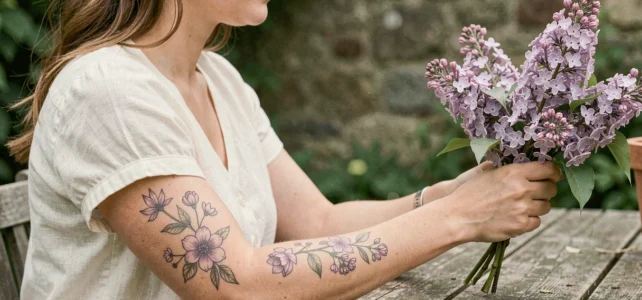
The lilac tattoo is part of floral designs whose interpretation changes depending on the chosen ink shade. A magenta lilac does not convey the same message as a pastel lilac, and this color distinction alters both the symbolism and the appearance on the skin. This article measures the differences in meaning between the variations of this design, their longevity, and the technical choices that follow.
Lilac Tattoo: Symbolism Chart by Color Shade
The color of the tattooed lilac directly determines the perceived emotional register. Recent sources distinguish several palettes, each linked to a specific symbolic field.
| Shade of Lilac | Main Symbolism | Emotional Register |
|---|---|---|
| Pastel lilac (soft purple) | First love, youthful innocence | Nostalgia, tenderness |
| Magenta lilac | Passionate love, seduction | Intensity, affirmation |
| White-pink lilac | Renewal, spring purity | Sweetness, freshness |
| Deep violet (close to dark lilac) | Spirituality, mystery, ambition | Introspection, rarity |
A magenta lilac refers to passionate love and seduction, while a pastel lilac remains rooted in budding emotions and the memory of first love. This difference is almost never detailed in floral tattoo guides, yet it conditions the choice of hue during the session.
To delve deeper into the meaning of the lilac tattoo and its connections to femininity, the symbolic registers also vary according to the cultural context in which the flower is interpreted.
Femininity and Spirituality: Two Symbolic Axes of the Inked Lilac
In Europe and the United States, violet (and by extension lilac) is mostly associated with spirituality, mystery, and rarity. Combined with pink, it shifts towards femininity and seduction. This dual anchoring explains why the lilac tattoo attracts very different profiles.
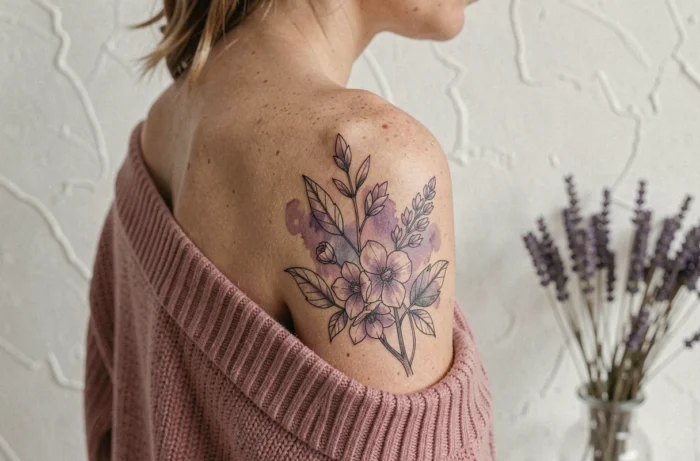
The lilac shares with other spring flowers (lily of the valley, cherry blossom) a symbolism of renewal. However, it is distinguished by an additional layer related to secret love and nostalgia, inherited from the Victorian tradition of the language of flowers. This layering of meanings (innocence, passion, mystery) makes the lilac a more complex motif than it appears.
In contemporary English-speaking cultures, the lilac is explicitly linked to youthful innocence and first love. This register places the flower in an emotional space that the tattoo permanently fixes, adding a memorial dimension to the motif.
The Connection Between the Crown Chakra and Lilac Color
Some wearers choose lilac for its correspondence with the crown chakra (sahasrara), associated with spiritual connection and expanded consciousness. This esoteric interpretation of the motif remains minority in tattoo studios, but it feeds into a distinct symbolic register of femininity. Deep violet then serves as a marker of introspection rather than seduction.
Longevity of Lilac Inks on Skin: Technical Constraints to Anticipate
Purple and mauve pigments are among the colors most sensitive to degradation from sunlight. A lilac tattoo loses its saturation faster than a black or red tattoo, which imposes technical choices from the design stage.
- Regular sun protection: lilac inks fade significantly faster without UV protection, especially on exposed areas (forearms, ankles, nape).
- Choice of placement: an area usually covered by clothing extends the lifespan of pastel colors.
- Touch-ups: plan a touch-up session after the initial healing, then follow up every few years to revive the hue.
- Contrast with skin tone: on light skin, pastel lilac stands out subtly, while on darker skin, a more saturated lilac or magenta will be more legible in the long term.
Maintaining a lilac tattoo is not limited to the first weeks of healing. Protection against the sun remains the main variable to preserve the depth of color over time.
Lilac Tattoo Patterns and Styles: How Technique Affects Appearance
The graphic style alters the symbolic perception of lilac as much as the color itself. A realistic colored lilac, with gradients and shadows, amplifies the emotional register (nostalgia, romanticism). A fine line lilac, without filling, leans the motif towards purity and modernity.
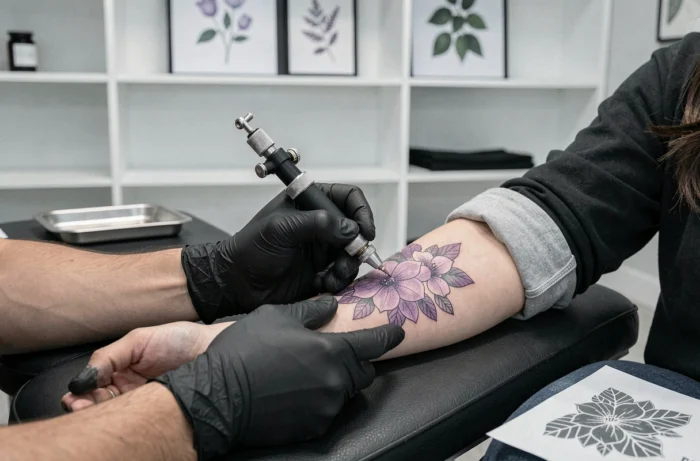
The watercolor tattoo style remains popular for lilac, as it replicates the natural shade variations of the flower. This style requires a tattoo artist skilled in pigment transitions, or else the result may appear blurred after healing. The choice of style directly conditions the readability of the motif in the long term.
Frequent Combinations with Other Floral Motifs
Lilac often associates with other flowers in larger compositions. Lavender, lily of the valley, or peony form aesthetically and symbolically coherent sets. These combinations allow for layering multiple meanings (transformation, femininity, protection) within the same tattoo.
Conversely, pairing lilac with geometric or abstract motifs shifts the register towards mystery and ambition, exploiting the spiritual dimension of violet rather than its romantic connotation.
Choosing Your Lilac Tattoo: Criteria That Make a Difference
The choice of a lilac tattoo relies on three parameters that interact with each other:
- The shade of color (pastel, magenta, deep violet) determines the main symbolic message.
- The placement on the body influences the ink’s longevity and the motif’s visibility in daily life.
- The graphic style (realistic, fine line, watercolor) modifies the aesthetic reading and the longevity of the appearance.
These three variables do not operate in isolation. A pastel lilac in watercolor on the forearm combines symbolic fragility and technical fragility, requiring a higher maintenance commitment. A magenta lilac in fine line on the back offers a better compromise between expressiveness and longevity.
The lilac tattoo remains a motif where the shade of color carries as much meaning as the design itself. Choosing between a nostalgic pastel and a bold magenta comes down to deciding between two personal narratives, and this decision deserves to be made with as much care as the choice of the tattoo artist.