
Traveling differently is not just about choosing a slower mode of transport or a less crowded destination. It is a way of viewing travel as an end in itself, where each step matters as much as the arrival. Slow travel, local hiking, and experience-centered travel: these approaches profoundly transform what one gains from an adventure.
Gig tripping and cultural travel: a trend redefining adventure
Have you ever planned a trip around a concert, a festival, or a specific cultural event? This practice has a name: gig tripping. It involves choosing your destination not for its beaches or monuments, but for a specific cultural experience.
A music festival in Norway, a contemporary art biennale in Southern Europe, a culinary event in a rural area: the destination becomes secondary. What motivates the departure is the event itself. This shift in logic encourages the discovery of cities and landscapes that one would never have considered otherwise.
This approach to travel generates unpredictable itineraries. You land in a small town because a musician you love is playing there, and you end up exploring the region for several days. Resources like voyageurscreateurs.com document these ways of building a trip around a passion rather than a tourist catalog.
Gig tripping illustrates a broader change: experience now takes precedence over destination. Travelers who adopt this logic return with memories tied to encounters and moments lived, not to a checklist of sites visited.
Slow travel in 2026: between sustainable ideal and economic reality
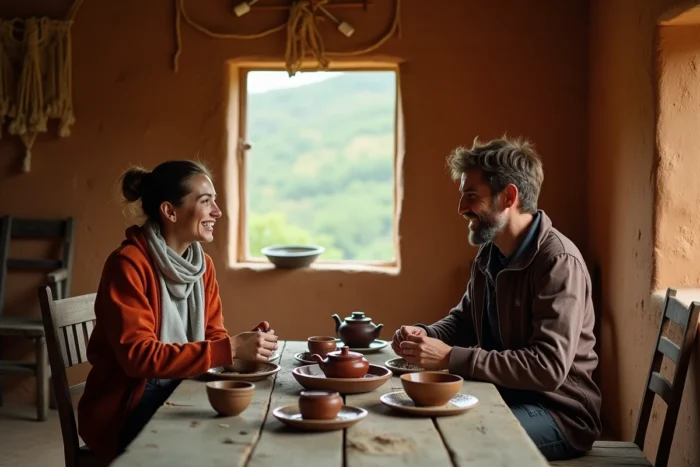
Slow tourism is officially presented as the major trend in the sector in 2026. The Spanish tourist office is promoting it as a focus for lesser-known rural destinations. Traveling by train, local bus, or bike: these modes of transport allow for slowing down and immersing oneself in the territories traversed.
But one question deserves to be asked. Slow travel requires time, and often more budget than a low-cost flight followed by a few nights in a hostel. Slow travel risks becoming a practice reserved for those who have time and means. Researchers cited by Euronews point out this tension between the ideal of sustainable and inclusive tourism and the socio-economic reality of these practices.
This observation does not disqualify slow travel. It invites adapting the approach to one’s real constraints.
Adapting slow travel to a tight budget
- Favor nearby destinations: local hiking, regional train to a neighboring city. TER Hauts-de-France documents a growing interest in these local and regional getaways in 2026.
- Combine slow transport and accommodation with locals to reduce the overall cost of the stay without sacrificing immersion.
- Plan shorter but more frequent stays, rather than a single large annual trip that requires weeks of availability.
Slow travel does not require crossing a continent without a plane. Two days of hiking in a nearby natural park fall under the same philosophy as a month of cycling tourism in Europe.
Hiking and nature: the return to nearby adventures
After complicated years for air transport and tourism, the French are once again rushing to travel. But some of them are redirecting this desire towards nearby adventures. Hiking is becoming a major travel trend for 2026, with a marked interest in regional getaways.
This movement is not a retreat. It is a rediscovery. Many travelers realize that remarkable landscapes exist just a few hours by train from their homes. Mountain ranges, coastal paths, and state forests offer authentic adventure experiences without an excessive carbon footprint.
What distinguishes a tourist hike from a true immersion
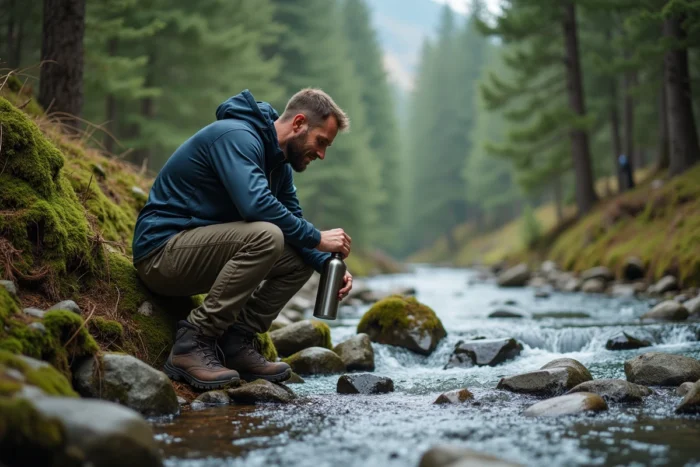
Walking on a marked trail for three hours and returning to sleep in a hotel is pleasant. But it is not the same experience as camping independently, cooking on a stove, and navigating with a topographic map.
The difference lies in three elements:
- The duration: a multi-day trek with nights in a refuge or tent creates a real break from daily life, while a day trip remains a leisure activity.
- The physical commitment: carrying your bag, managing the weather, adapting your pace. These constraints are an integral part of the adventure.
- The voluntary deprivation: turning off notifications, accepting discomfort, not knowing exactly what the evening’s stop will look like. This is where the journey truly begins.
The unforgettable adventure does not depend on the distance traveled but on the level of commitment to the experience. A five-day solo trek on a GR in France can leave a deeper mark than an organized tour on the other side of the world.
Building your own trip: stepping away from pre-packaged itineraries
Travel guides and booking platforms offer optimized routes. They are convenient, but they produce uniform experiences. Thousands of travelers follow the same itinerary, visit the same spots, take the same photos.
Traveling differently means accepting to build an itinerary based on personal curiosities rather than a ranking of popular destinations. An interest in geology can lead to Iceland or the Dolomites. A passion for fermentation can lead to exploring rural Japan or Georgia.
This approach requires a longer preparation process. It involves reading, cross-referencing sources, contacting locals, and accepting the unexpected. The result is a trip that resembles no other because it is built on personal choices rather than a recommendation algorithm.
Mass tourism and alternative travel do not oppose each other like good and evil. Every journey can incorporate a part of slowing down and active curiosity. Choosing a train instead of a domestic flight, sleeping one night with locals instead of in a hotel chain, dedicating a day to a local market instead of a crowded museum: these micro-decisions, accumulated, change the very nature of travel.